

 English
  中文简体
中文简体  русский
  Español
  عربى
عربى 

أخبار الصناعة
Pellet Mill Dies: Specifications, Compression Ratios and a Buying Checklist
A pellet line rated at 8 tonnes per hour that slips back to 6.5, with fines in the finished bags creeping toward 5 percent, is telling you something long before anyone opens the die chamber door: the working face of the die is worn. Hole entrances have rounded off, effective length has shrunk, and the press pays for it in capacity. Among all wearing parts in a pellet press, pellet mill dies are usually the most expensive item, yet they are still often ordered by hole diameter alone, with compression ratio, open area and steel grade left to the catalogue.
The guide below covers what the die does, the specification lines that decide performance, how compression ratio should be chosen, and the roller hardware that decides how long any of it lasts.
محتوى
- 1 What Pellet Mill Dies Do Inside the Press Chamber
- 2 Die Spec Sheet Checklist: Holes, Effective Length, Open Area, Steel
- 3 Compression Ratio Explained: The Number Behind Pellet Hardness
- 4 Ring Die vs Flat Die: Matching the Press Chamber to Your Output
- 5 Pellet Mill Die Wear Is a Two-Part Problem: Pair the Roller Shells
- 6 Five Field-Proven Ways to Extend Ring Die Service Life
- 7 A Pre-Order Checklist for Pellet Mill Dies
- 8 Frequently Asked Questions
What Pellet Mill Dies Do Inside the Press Chamber
A pellet mill die is the perforated steel ring or disc that actually forms the pellet: rollers press conditioned material through thousands of drilled holes, and friction, pressure and moisture bind it into dense strands that are cut to length outside.
A pellet mill die is a replaceable, precision-drilled steel component, ring-shaped in ring die presses and flat in flat die presses, whose hole geometry sets pellet diameter, density and throughput.
Every hole carries the same anatomy, and every parameter on it is a purchasing decision:
- Hole diameter: the pellet size the buyer orders, from 2 mm fry feed to 8 mm fuel.
- Inlet countersink and angle: too shallow starves the intake, too deep weakens the face.
- Effective length: the distance under compression, which forms the compression ratio with the diameter.
- Total thickness and relief: structural depth plus any widened exit that shortens the working length.
- Drill pattern and hole count: how many holes fit across the active width, which sets open area and capacity.
Change any one and capacity, pellet hardness and die strength move with it.
Die Spec Sheet Checklist: Holes, Effective Length, Open Area, Steel
Five spec lines decide most of a die's performance and price: hole diameter, effective length, open area, steel grade and working hardness.
Hole diameter is fixed by the pellet spec being sold. Effective length, not total thickness, controls compression and is the figure to compare between quotes. Open area, the share of the face occupied by holes, trades capacity against strength: more steel removed means more tonnes per hour but a face that flexes and cracks sooner. Stainless X46Cr13 shrugs off the corrosion that steam and acidic feed cause, while case-hardened 20MnCr5 suits abrasive biomass. A properly made die arrives with its working surface between HRC 52 and 58, backed by a hardness certificate.
| Specification | Livestock feed die | Wood biomass die |
| Typical hole diameter | 2-4 mm | 5-8 mm |
| Typical effective length | 20-40 mm | 30-55 mm |
| Compression ratio (L/D) | 8:1 to 13:1 | 5:1 to 8:1 |
| Common steel grades | X46Cr13 (4Cr13) stainless | 20MnCr5 / 40Cr alloy |
| Working surface hardness | HRC 52-58 | HRC 52-58 |
| Typical open area | 20-28% | 18-25% |
Watch-out: a die drilled with more open area than the press was designed for can draw more current than the main motor holds in reserve, so quote the machine model and stamped die code with every enquiry.
Compression Ratio Explained: The Number Behind Pellet Hardness
Compression ratio is the most quoted and most misunderstood figure on a die: raise it and pellets get denser and harder, but the press needs more power, more conditioning and steadier operation.
Compression ratio equals effective hole length divided by hole diameter. A 4 mm hole with 40 mm of effective length gives a 10:1 die.
Formulation sets the starting point. Fat lubricates, so oily poultry rations extrude easily through shorter working lengths; lignin-bound sawdust needs thick die walls but modest ratios to avoid choking the line. Start from a proven ratio and adjust in one direction only: crumbly pellets call for more effective length, an overloaded motor or frequent choking for less. Good steam conditioning does some of the same work as extra die length, which is why well-conditioned feed can run a shorter, cooler die.
Typical starting compression ratios (L/D) by application
Ring Die vs Flat Die: Matching the Press Chamber to Your Output
Ring dies win on capacity and consistency, flat dies win on price and simplicity, so the choice usually comes down to tonnes per hour.
Ring die chamber
- Capacities from roughly 300 kg/h up to 30 t/h on industrial lines
- Even compression, so hardness and moisture hold a tight band
- Hardened stainless or case-hardened dies with long service intervals
- Higher purchase cost and a heavier die change procedure
Flat die chamber
- Typically 50 to 1,000 kg/h for farm and workshop scale
- Simple structure with dies that cost less and swap in minutes
- Easy formula changeover for mixed feed and small biomass runs
- More variation in pellet hardness across the die face
Rule of thumb: if pellets are sold against a customer specification, the ring die chamber pays for itself; for on-farm use, a flat die usually reaches payback sooner.
Pellet Mill Die Wear Is a Two-Part Problem: Pair the Roller Shells
A die never wears alone: every tonne that reaches the holes has first been compressed by the roller shell, so die life is decided by the pair.
Roller shells are smaller, cheaper and quick to replace, and most maintenance plans budget two to three shell changes before a die is retired. Three pairing rules protect that investment:
- Run shell and die at compatible hardness so neither surface gouges the other.
- Match shell width and tooth pattern to the die's active hole field.
- Replace in matched sets once wear is advanced, or a new die inherits the worn rollers' uneven profile within days.
For abrasive duty, hardened GCr15 bearing steel shells hold their tooth profile far longer than plain carbon steel.
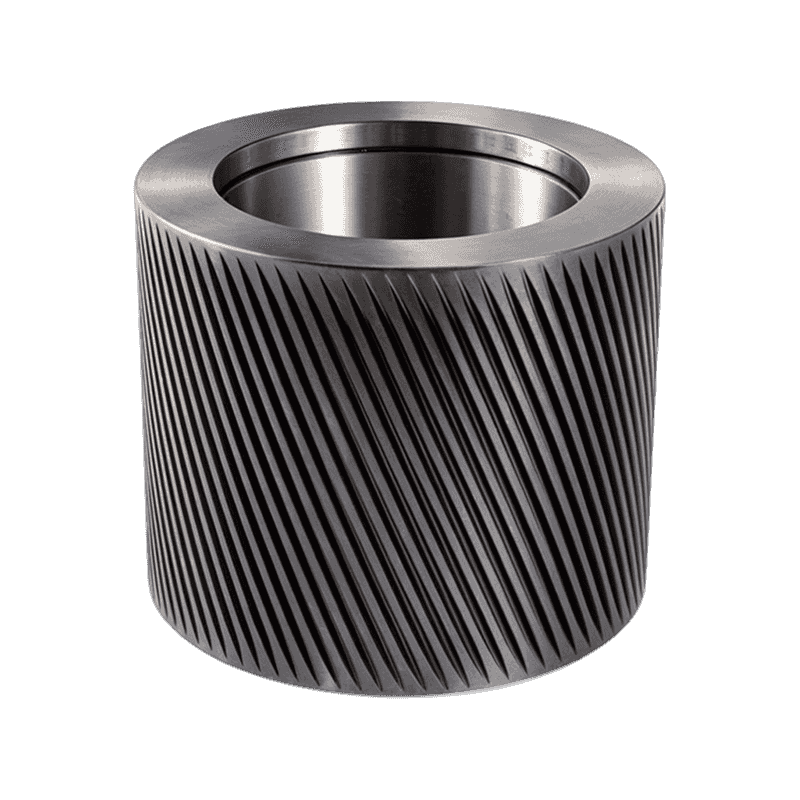 Bearing Steel GCr15/100Cr6 Pellet Roller Shell Forged from high-carbon chromium bearing steel and heat treated for high-stress pelletizing, these roller shells hold their tooth profile far longer than plain carbon steel in abrasive biomass or feed duty. View Product →
 Tooth geometry is the half of the pairing buyers forget. Curved-tooth shells bite into slippery or fibrous material more reliably and spread it across the die width, and the difference shows up as capacity at the same motor load. Construction, wear and buying criteria for a complete pressure roller assembly are set out in a separate guide.
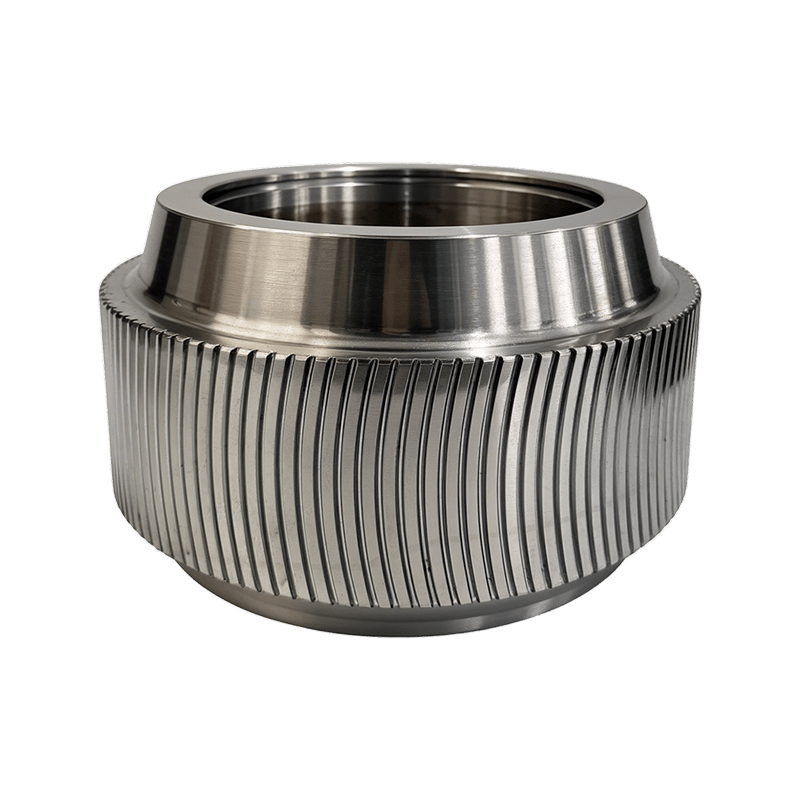 Curved Tooth Roller Shell for Pellet Mill An arc-tooth roller shell for ring die pellet mills that grips slippery or fibrous material more reliably and spreads it across the die width, improving capacity and pellet quality at the same motor load. View Product →
 Five Field-Proven Ways to Extend Ring Die Service Life
Premature die failure usually traces back to the process around the die rather than the die itself, and five habits prevent most of it.
- Run the die in gently: new bores leave the gun-drill rough, so flush the press with oily, low-grade material for the first half hour.
- Hold the roller gap at 0.1-0.3 mm: tighter grinds metal on metal, wider lets material slip through uncompressed.
- Condition before you compress: dry, under-steamed mash behaves like grinding paste, so bring temperature and moisture up to the formulation's sweet spot.
- Clear plugs the right way: use a soft drift or a drill with light taps, because mushroomed inlets from hammering permanently narrow the intake.
- Store dies dry and sealed: push oily meal through after the final run, bag the die and keep it off damp floors, since rust in the bores kills a stored die fast.
is a normal planning figure. The shells are the cheaper wearing part, and running them thin to postpone a change is the most expensive economy in the chamber.
A Pre-Order Checklist for Pellet Mill Dies
A die that arrives wrong costs two changeovers and days of output, so confirm these points in writing before paying:
- Press model and the stamped die code from the old part
- Hole diameter, effective length, total thickness and countersink angle
- Steel grade with a hardness certificate in the HRC 52-58 window
- Drill pattern matched to the roller shell width in service
- Compression ratio matched to the formulation, not a catalogue default
- Spare roller shells, spacers and oil slingers in the same shipment
Suppliers that specialize in the die's wearing partners make this easier to close out. Anhui Jindingsheng Machinery Co., Ltd., a roller shell and pressure roller assembly manufacturer based in Guangde, Anhui, presents itself as a one-stop service center for pellet press parts and ships to the United States, Japan, South Korea, Vietnam, France, Bangladesh, Russia and India, so die-side and roller-side hardware can be specified together.
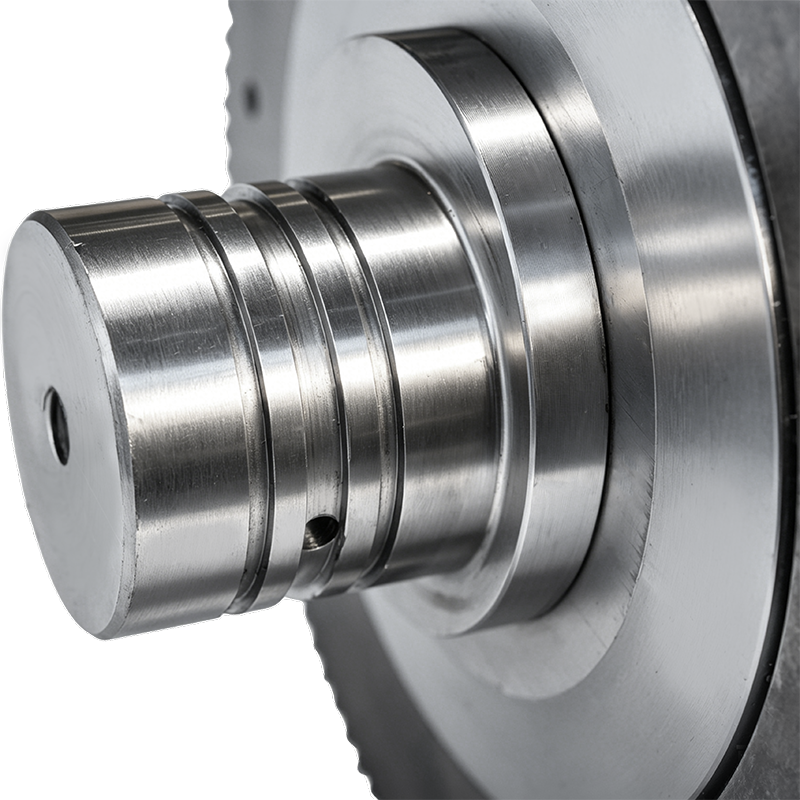 Pellet Mill Ring Die Roller Shell Assembly A complete roller assembly with alloy steel shell, heavy-duty bearings and multi-layer sealing, allowing die, roller shells and drive hardware to be specified together as one wearing system. View Product →
 Bottom line: buy the die, the roller shells and the drive hardware as one wearing system, and cost per tonne falls with every die you run.
Quick answers for buyers shortlisting die and roller hardware.
Frequently Asked Questions
How long does a pellet mill die last?
There is no fixed figure. Feed lines commonly report 800 to 1,500 operating hours from a stainless die, while abrasive biomass can cut that sharply. Track tonnes and hole wear in millimeters, not calendar time, and compare dies on cost per tonne.
What compression ratio does my formulation need?
Start from the product family: roughly 9:1 to 13:1 for most livestock feeds, 5:1 to 8:1 for wood and straw. Crumbly pellets call for a higher ratio; an overloaded motor or choking calls for a lower one.
Can one die run both feed and biomass?
Not sensibly. Feed and biomass need different hole diameters, effective lengths and steel grades, so a shared die compromises hardness or capacity. Most plants keep one die per product family, oiled and sealed.
Should roller shells be changed together with the die?
Yes, whenever wear is advanced. A new die picks up the worn rollers' uneven profile within days, and the shell's hardened surface is what protects the die face. Ordering both together also removes a second changeover.

تواصل معنا
تابعونا
روابط سريعة
اتصل بنا
البريد الإلكتروني: ysf@jindingsheng.com.cn
العنوان: رقم 19، منطقة التركيز الصناعي لمدينة تشيوكون، مدينة قوانغده، مدينة شوانتشنغ، مقاطعة آنهوي
